ArmeniaConfirmed

Yerevan's mayor's office refused two of three planning applications for land the organisation bought in 2009 on the ground that neighbours complained about religious buildings, and deferred the third. On 1 October 2026 a three-judge Committee of the European Court of Human Rights held unanimously that no evidence of those complaints was ever produced and no law allowing the refusals was ever named, so the interference was not "prescribed by law" and breached Article 9. It awarded EUR 4,500 plus EUR 3,232 in costs. The judgment is final.
· October 1, 2026 · 11 min read
D.D.C. No. 24-cv-02523Confirmed

A federal judge in Washington threw the case out in September 2025 because the lawsuit papers had never been validly delivered. On 23 July 2026 he undid that dismissal and gave the Jehovah's Witnesses' Pennsylvania corporation 180 days to serve the defendants again, this time through the State Department. On 12 August the court clerk sent the papers to the State Department to pass on. As of the docket reviewed on 21 October, the court has decided nothing about whether a U.S. court can hear the claim at all.
· Updated October 21, 2026 · 10 min read
A duty judge authorized transfusions on the basis of a fax the Court found 'very limited, incorrect and incomplete.'Confirmed
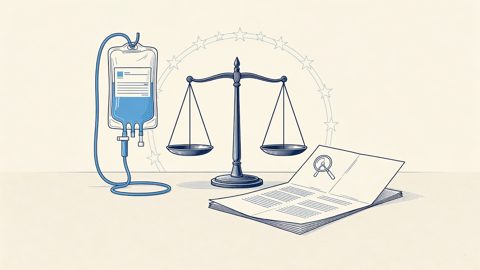
In Pindo Mulla v. Spain, the ECHR Grand Chamber unanimously found that Spain breached Rosa Edelmira Pindo Mulla's rights when a duty judge authorized three transfusions during emergency surgery despite her advance written refusals. The Court faulted the decision-making process, not the doctors' medical judgment.
· September 17, 2024 · 8 min read
RulingConfirmed

The European Court of Human Rights ruled on 9 May 2023 that Finland may require Jehovah's Witnesses to obtain householder consent before noting personal data during their ministry — no violation of Articles 9 or 6.
· May 9, 2023 · 3 min read